Total Views

Saturday, December 28, 2024

Santa’s Winter Wonderland: A Journey in Christmas Painting

Creating Christmas-themed paintings is both fun and challenging. The image below captures my journey of trial and error—adding and removing characters until the composition finally came together.  

My process is often a bit scattered, much like my preparatory paintings, as I explore ideas before committing to a final concept. Before starting this particular piece, I spent hours searching for inspiration, sifting through countless photos. Ultimately, the idea for this project sparked from a charming Christmas card.  

When my mind is bursting with ideas, I often create quick thumbnail sketches to refine the layout. If my memory falters, I rely on reference photos as visual aids to bring clarity to my vision.  

Deciding on the story I wanted to tell with this painting was a challenge. My first attempt featured a lively scene with children playing in the snow—building a snowman, a dog enjoying an igloo, and kids sledding in the background. While it was fun to paint, the composition felt overly busy and lacked cohesive planning.  

In the end, I opted for a simpler yet whimsical narrative: Santa building a snowman on his winter wonderland farm. This second idea became the final version, and I couldn’t be happier with how it turned out.  


Friday, December 20, 2024

Painting Christmas Cards

When it is cold and blustery outside and you’re looking for a fun Christmas activity to do with the kids? Paint seasonal greeting cards. 

For this project, I used 5.5 x 8.5-inch cold-pressed watercolor paper. I started by folding the paper in half and then painted my subject horizontally. Although I typically use watercolor paints, I decided to use acrylics for this piece to achieve a more vibrant, textured effect. While you can choose any theme for your greeting cards, I opted to paint a snowman, inspired by the winter season and my love for capturing the charm of snowy landscapes.


Thursday, December 12, 2024

Snowman on a Winter’s Night

‘Tis the season to paint winter scenes! But how does one capture the magic of snow on canvas? I quickly discovered that creating realistic snow takes more than a few dabs of white paint. After several attempts, I turned to YouTube in search of fun, beginner-friendly tutorials featuring winter themes.  

For me, snow is one of the trickiest subjects to paint. It’s not just white—it’s a blend of cool, warm, and neutral tones that bring it to life. To make the process enjoyable rather than overwhelming, I found a simple step-by-step video tutorial for painting an adorable snowman. It’s perfect for beginners and makes for a charming winter project.  

Looking for a creative gift idea? This snowman painting could be the perfect personal touch! Check out the video tutorial linked below and start your own winter masterpiece.  
 

Monday, December 2, 2024

Repurpose and Renew

I often repurpose old canvases to bring new subjects to life. However, not every project goes smoothly. For example, when I try to paint purely from imagination, the results often fall short. Without the guidance of reference photos, my brain struggles to create visually compelling images. That’s when I turn to my photo library or search online for inspiration.  

For this project, I’m exploring an underwater scene featuring a curious octopus being stalked by hungry sharks.  

Stay tuned—I'll share more photos as the painting progresses! Inspirational Photo


Refining details surrounding the subject help create texture 

Detailing shadows and enhance lighting 

Reworking color saturation 

Balancing Inspiration and Originality in Art

When starting a new project, I seek out inspiration photos of the subject I want to capture. If I don’t have the right images in my personal collection, I search online to find the perfect composition and perspective. For this particular project, I was looking for reference photos such as an octopus, sharks, sea grass and starfish which I will incorporate into my work.

People often ask me, “Isn’t that copyright infringement?” While it can be, I usually alter the image to make it my own. I’m reminded of a quote often attributed to Picasso: *“Good artists copy; great artists steal.”* I’m not suggesting this is inherently right or wrong, but it’s how I’ve learned to paint a variety of subjects. Without a photographic memory, this approach helps me refine my artistic process.

Look out for my next blog post when I merge my subjects. 


Thursday, October 31, 2024

Spooky Mannequin Makeover

Decorating pumpkins for Halloween is a classic tradition for many, but I’ve taken a different approach. Instead of pumpkins, I decorate mannequin heads I’ve collected over the years. As a hairstylist, having extra mannequin heads lying around is common, so I thought, why not turn them into unique Halloween decor? With a few strokes of acrylic paint and a bit of inspiration, I've found this makes the usual pumpkin carving seem almost dull in comparison. Each head takes on its own eerie character, bringing a twist to the Halloween spirit! 


Tuesday, October 15, 2024

Painting Sunsets

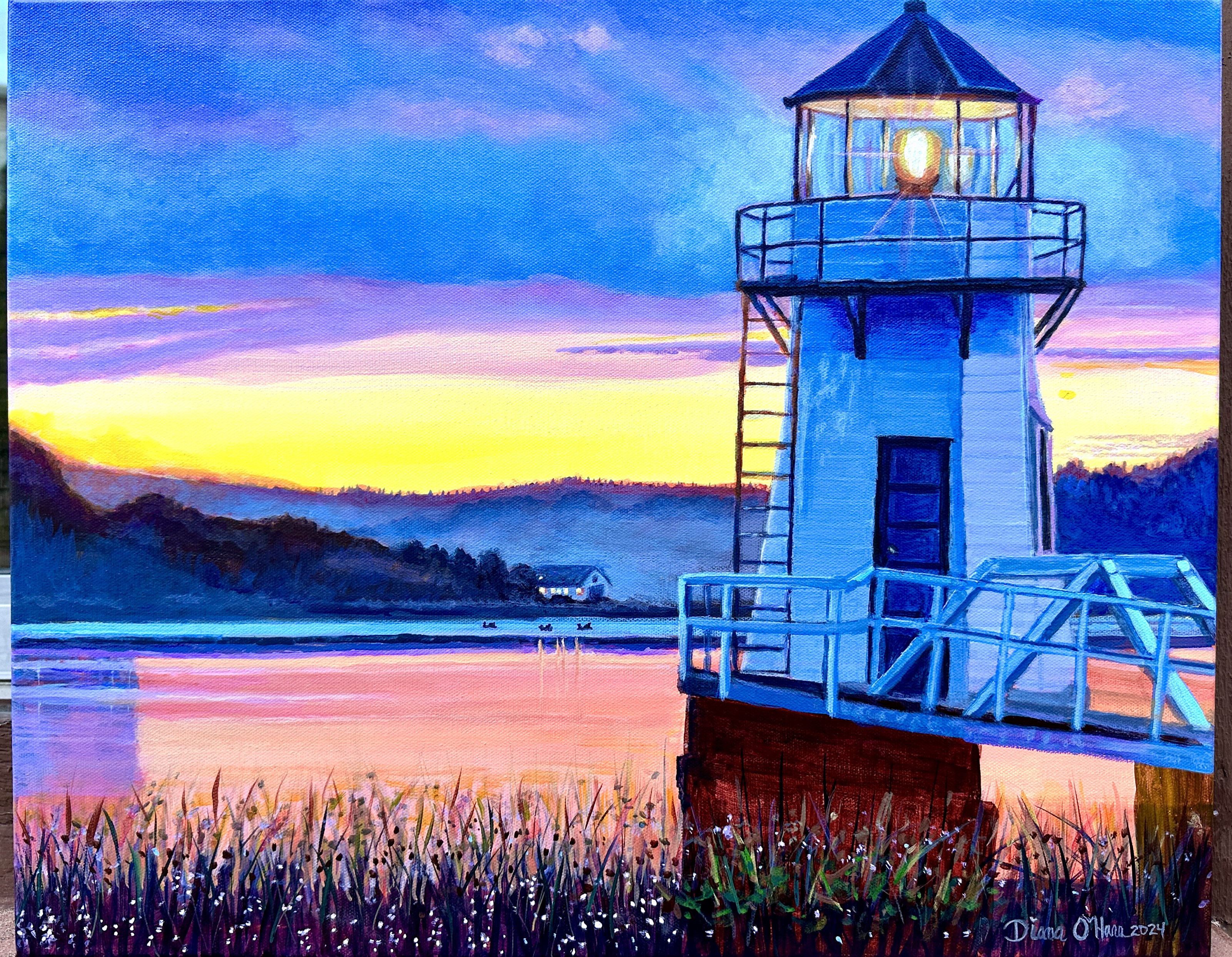
I’m in the beginning stage of painting a lighthouse with a beautiful sunset backdrop. The inspiration for this piece came from a photo I found online and wanted to recreate this subject using acrylic paint. 

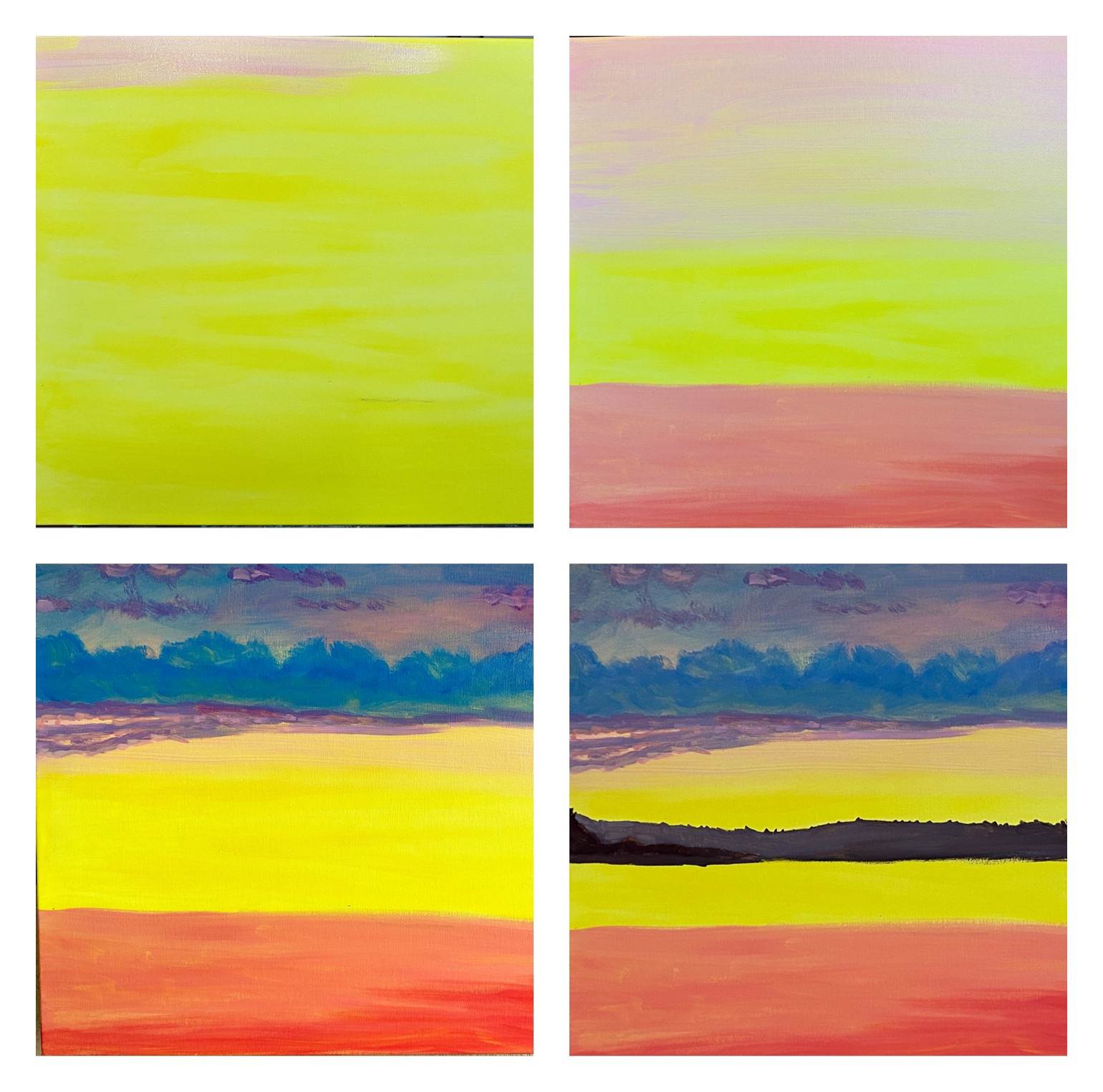
Where do I start? Was my question as I studied the photo. At times, I have to study other artist’s paintings or follow along with a YouTube tutorial. However, I decided to get started and see what happens. I began with painting the entire canvas a light yellow hue diluted with water. Then I preceded with painting the top portion of canvas with a pink (magenta) tone mixed with white. The bottom portion I used a darker pink tone mixed with crimson red, orange, magenta and white. I did not gradient the paint in with the yellow because I waited too long since it had dried. 

Next, I used a mixture of crimson red, orange, magenta ultramarine blue and white until I was satisfied with the color for sky. When I begin a painting project on my own without help from a tutorial I often make many mistakes and try and learn from them. That is what I call a working experience or just plain luck if my subject turns out.

For the center color I use raw umber, ultramarine blue, crimson red, orange and white. Basically, the same colors I used for the sky but added more raw umber to create the land stretched across the center of the canvas.

The fun and most challenging part of a painting is when it’s time to blend or get rid of hard edges. This helps create a more realistic sky. This takes practice and after 20 years I still have issues. Recently, I purchased a mop brush to help with this technique and find it does help. Learning how to paint is the “why” I love most. It also is satisfying when a painting takes on a life of its own. 

Lastly, I use a cut out shape of the lighthouse to see where I will eventually paint my main character. It helps me see visually instead of instinctively knowing where to place this shape. That way I don’t begin painting and say, “whoops”; it doesn’t look right and then paint over my error. 

After a few minor adjustments—like removing the sun from the left side of the painting in the second photo below—I realized it wasn't where I wanted the light source, as the light appears to come from the right. I also brightened the sky around the lighthouse and enhanced the light beams, as shown in the first photo. Now, this painting feels complete.  


The Painting That Waited

Happy New Year! After a five-month hiatus, I’m thrilled to share what I’ve been working on since my last post in August 2025. Below is a pai...